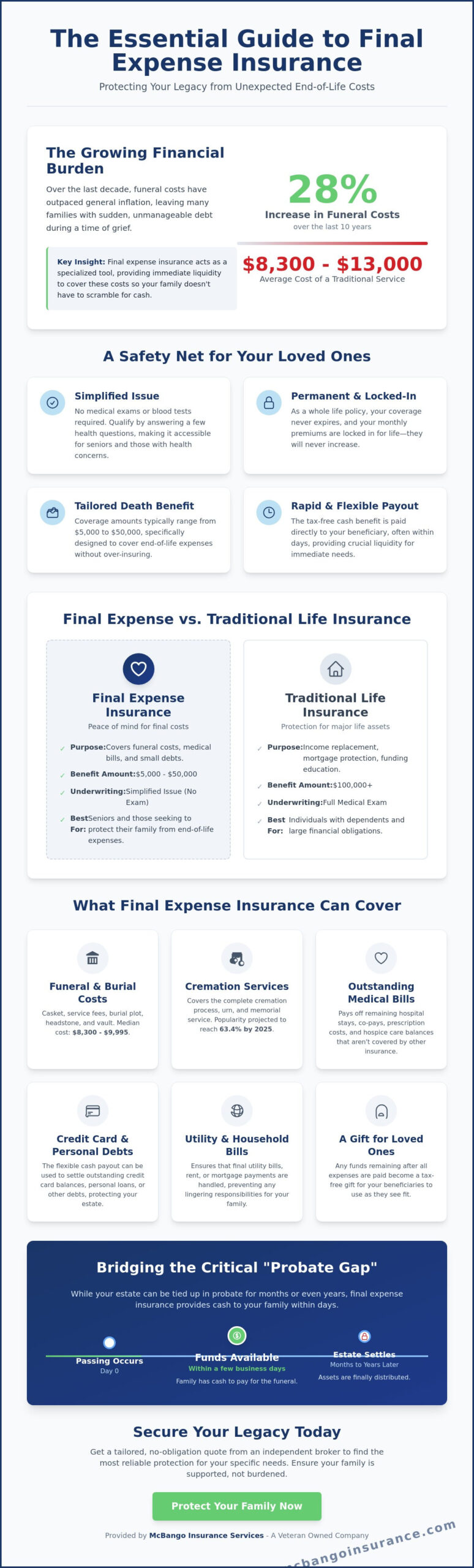
Did you know that funeral costs have surged by 28% over the last decade, growing at a rate that outpaces general inflation? This spike means a traditional service now averages between $8,300 and $13,000, often leaving families to face unexpected financial strain during their most difficult moments. If you are asking what does final expense insurance cover, it’s helpful to see it as a specialized liquidity tool. It handles the immediate friction of a passing so your family doesn’t have to scramble for cash.
We understand the worry that medical bills or funeral expenses might deplete the inheritance you worked hard to leave behind. You want a secure plan that prevents family arguments and provides clear, empathetic support. This guide will show you exactly how final expense insurance protects your legacy by covering everything from service costs to outstanding debts. You’ll learn the difference between this and traditional whole life insurance, discover the flexibility of the payout, and see a detailed list of exactly what these policies can handle for your loved ones.
Key Takeaways
- Understand how simplified issue policies provide permanent protection without the need for a medical exam.
- Identify exactly what does final expense insurance cover, ranging from burial and cremation costs to outstanding hospice balances and medical co-pays.
- Bridge the “Probate Gap” by providing your family with liquid funds that arrive within days of a passing.
- Provide your beneficiaries with a flexible cash payout that allows them to handle urgent debts alongside funeral arrangements.
- Secure a tailored health-match through an independent broker to ensure you have the most reliable protection for your specific needs.
What is Final Expense Insurance and How Does It Work?
Final expense insurance is a specialized form of whole life coverage designed to manage the specific financial hurdles that arise at the end of life. Unlike traditional policies that often focus on replacing a decades-long salary, this type of final expense insurance provides a smaller, more focused death benefit. Because it’s a permanent policy, your coverage never expires as long as premiums are paid. Your monthly costs are locked in the moment you sign, meaning they won’t increase even as you get older or if your health changes. This reliability offers a steady hand in an unpredictable world, ensuring funds are ready when they’re needed most.
One of the most appealing aspects of these plans is the simplified application process. Most options are “simplified issue,” which means you don’t have to endure a medical exam or provide blood samples for approval. Instead, you simply answer a series of health questions. This approach makes it much easier for seniors or those with moderate health concerns to qualify for protection. Understanding exactly what does final expense insurance cover begins with recognizing it as a tailored tool for peace of mind rather than a complex investment vehicle.
To better understand this concept, watch this helpful video:
Final Expense vs. Traditional Life Insurance
The primary difference between these products lies in their scale and intended purpose. While a standard term policy might offer hundreds of thousands of dollars for mortgage protection, final expense plans typically feature face values between $5,000 and $50,000. Seniors often choose this path because they no longer need massive payouts to replace a working income. Instead, they want to ensure their family isn’t burdened by the $8,300 median cost of a traditional funeral. With cremation rates in the U.S. projected to reach 63.4% by 2025, these policies provide the specific liquidity needed for modern end-of-life choices without the complexity of traditional underwriting.
The Role of Cash Value in Final Expense Plans
Since these are whole life policies, they build a small amount of cash value over time. While the primary goal is the death benefit rather than aggressive investment growth, this cash value adds a layer of stability to the policy. It’s a secure way to ensure the plan remains active and reliable for the long term. When you explore your options through McBango Insurance Services, we help you shop multiple carriers to find a health-match that fits your specific context. We focus on making the process transparent so you can feel confident about what does final expense insurance cover for your loved ones.
Core Coverage: Funeral, Burial, and Cremation Costs
When a loved one passes, funeral homes typically require payment or a significant deposit before services begin. This immediate financial demand creates a liquidity gap that can catch families off guard. When asking what does final expense insurance cover, the most vital benefit is the speed of the payout. Because these claims are often processed within days of receiving a death certificate, your family has the cash on hand to secure a venue and pay for professional services without reaching for a high-interest credit card. This protection ensures that a time of mourning isn’t overshadowed by the stress of accruing new debt.
Federal law, specifically the FTC Funeral Rule, mandates that funeral homes provide you with an itemized price list. This transparency is helpful, but it also reveals how quickly costs accumulate. By securing a policy now, you provide your family with a steady hand to manage these itemized bills. They won’t have to scramble for funds or argue over how to split the costs during an already emotional week. Instead, they can focus on honoring your memory with the financial security you’ve provided.
Traditional Burial Expenses
Traditional services involve several hard costs that quickly add up. According to 2023 NFDA data, the median cost for a funeral with viewing and burial is approximately $8,300. If you include a burial vault, which many cemeteries require to prevent the ground from settling, that figure rises to $9,995. Burial insurance is designed to handle these specific line items, including the casket, the burial plot, and the headstone. In regions like Florida’s Treasure Coast, cemetery prices can vary significantly, making a flexible death benefit essential. These policies also cover professional fees for embalming, transportation, and the use of the funeral home facilities.
Cremation and Memorial Services
With the U.S. cremation rate projected to reach 63.4% in 2025, many families are choosing more flexible end-of-life arrangements. A direct cremation averages about $2,202, but adding a memorial service brings the median cost to $6,280. Final expense coverage isn’t just for the basics; it provides the funds for urns, niche placements, or even a celebration of life gathering. It also covers soft costs that many overlook, such as floral arrangements, obituary notices, and catering for guests. This comprehensive approach ensures every detail of your legacy is honored without depleting your family’s savings. If you want to see how these costs fit into a larger plan, you can explore tailored final expense options that match your specific goals.
Covering “Hidden” Final Expenses: Medical Bills and Debts
Many people assume the payout from a policy goes straight to a funeral director. It doesn’t. The death benefit is paid directly to your chosen beneficiaries as a tax-free cash lump sum. This flexibility is a core part of what does final expense insurance cover because it allows your family to prioritize the most pressing bills as they arrive. If you have medical co-pays or hospital balances, your family can settle those immediately rather than letting interest accrue or dealing with aggressive collection agencies.
Protecting your estate means ensuring your heirs actually receive their intended inheritance. Without this cash injection, executors might have to sell off family assets, vehicles, or property to satisfy creditors. By providing a dedicated fund for these “hidden” costs, you act as a steady hand that guides your family through a complex financial landscape. This proactive service ensures that the legacy you’ve built remains intact for the next generation.
Settling Healthcare Obligations
Medicare and private insurance often leave significant gaps in coverage during the final months of life. Medicare Part B typically covers 80% of approved medical services, which leaves a 20% gap that can translate into thousands of dollars in out-of-pocket costs for hospital stays or specialized treatments. Final expense insurance acts as a safety net for medical liabilities by providing immediate cash to cover these trailing costs. This payout can also be used to reimburse relatives who may have used their own savings to pay for:
- Hospice care balances and specialized nursing fees
- Outstanding prescription drug costs
- Emergency room co-payments and diagnostic fees
- Deductibles that reset at the start of a calendar year
Eliminating Outstanding Personal Debt
Small debts can create significant friction during the probate process. If you leave behind credit card balances or personal loans, these must typically be addressed before any assets are distributed to your heirs. Clearing these debts quickly allows for a smoother transition of your other assets. Because the insurance payout is usually delivered within days of a claim, your family can handle these liabilities before they become legal hurdles. You can use our Life Insurance Needs Calculator to estimate these potential liabilities and ensure your coverage is sufficient. Taking this step now simplifies the complexities of your estate and makes your family’s life easier during a difficult transition.
Liquidity and Flexibility: Why the Payout Method Matters
Bank accounts freeze. This is the harsh reality many families face during the “Probate Gap,” a period where legal authorities lock down a deceased person’s assets to ensure debts are settled properly. In Florida, this legal process can take anywhere from six months to over a year. While the courts move slowly, your family’s financial obligations move quickly. Funeral homes often require payment upfront, and utility companies don’t stop sending bills just because an account is in probate. This is why the payout method is a vital part of the conversation when asking what does final expense insurance cover.
A life insurance claim bypasses this gridlock entirely. While traditional assets are stuck in court, life insurance providers typically process and pay out claims within 24 to 72 hours of receiving a death certificate. This rapid delivery of funds acts as a steady hand, providing the immediate cash needed to handle deposits and urgent costs. It transforms a period of high-stress financial scrambling into a time where your family can focus on their grief and honoring your memory. Reliability in these moments is the ultimate form of protection.
Bypassing the Probate Process in Florida
Life insurance proceeds are generally not considered part of the probate estate. Because the contract is between you and the insurance company for the benefit of a specific person, the money goes directly to your beneficiary. This ensures that the funds are available to your loved ones while the rest of the legal process unfolds in the background. To ensure this immediate access, it’s essential to keep your beneficiary designations updated. By naming a specific person rather than “the estate,” you guarantee that the cash remains a private, fast, and secure resource for your family.
The Beneficiary’s Discretion
One of the most significant advantages of this coverage is its total flexibility. Unlike “Pre-need” plans purchased at a specific funeral home, which are often non-transferable and restricted to certain services, a final expense payout is a cash lump sum. The insurance company doesn’t track or restrict how the money is spent. Your beneficiary has the discretion to use the funds for whatever is most urgent. This might include:
- Travel and airfare for out-of-town family members
- Lodging and meals for those attending the service
- Replacing lost income if a spouse needs to take time off work
- Settling unexpected property taxes or emergency home repairs
This level of customization ensures that the plan fits the specific context of your family’s life. For more detailed insights on how to structure your plan, we recommend reviewing our Senior’s Guide to Florida Final Expense Insurance. We specialize in helping you find tailored final expense protection that simplifies the complexities of end-of-life planning and provides true peace of mind.
Securing Your Legacy with a Tailored Florida Plan
One-size-fits-all products rarely provide the security families need during a crisis. Because every individual’s health history and financial goals are unique, a generic policy might leave you with unnecessary costs or restrictive terms. A tailored approach ensures that your plan fits your specific context, providing exactly what is needed without any wasted expense. When you look closely at what does final expense insurance cover, you see it’s more than just a list of costs; it’s a strategic tool designed to protect your family from the immediate friction of loss. We act as a steady hand, helping you choose a path that reflects your wishes and respects your budget.
At McBango Insurance Services, we don’t represent just one insurance company. We are independent brokers who shop multiple carriers to find the best health-match for your situation. This is a critical service because different companies have different views on health conditions like diabetes or high blood pressure. By matching you with the right provider, we can often lock in lower premiums that stay the same for the rest of your life. Acting while you are relatively healthy is the most effective way to secure these reliable rates. It ensures that your final act of love for your family is one of preparation and peace of mind.
Working with a Local Jensen Beach Broker
Local expertise matters when you are dealing with the Florida insurance market. Our team understands the specific end-of-life logistics in Jensen Beach and the surrounding Treasure Coast areas, from local cemetery requirements to the regional costs of memorial services. We simplify the entire application process by handling the paperwork and explaining every detail in plain English. We offer a variety of Final Expense Life Insurance options designed to fit various budgets. This personalized service moves beyond a simple transaction to build a long-term relationship based on trust and mutual interest.
Next Steps for Peace of Mind
Taking the first step toward protection doesn’t have to be complicated. We focus on making the process as easy and transparent as possible so you can feel secure in your decision. Follow this simple checklist to get started:
- Health Review: Gather a basic list of your current medications and health history to help us find your best match.
- Budget Check: Determine a comfortable monthly premium that you can reliably maintain over the long term.
- Beneficiary Selection: Choose a trusted person to receive the funds, ensuring they understand the flexibility of the payout.
We invite you to reach out for a personalized consultation where we can answer your specific questions about what does final expense insurance cover. Our goal is to provide you with a structured solution that alleviates anxiety and protects your heirs. Contact McBango Insurance Services today for a tailored protection plan.
Secure Your Family’s Peace of Mind
Choosing the right protection is about more than just numbers; it’s about ensuring your loved ones aren’t left with a financial burden during their time of grief. We’ve explored exactly what does final expense insurance cover, from the $8,300 median cost of a traditional funeral to the “hidden” medical debts that can deplete an inheritance. By bypassing the months-long probate process, these policies provide immediate liquidity when your family needs it most. You don’t have to leave these details to chance when a tailored solution is within reach.
At McBango Insurance, our independent brokers shop over 20 different carriers to find the best health-match for your specific context. We specialize in Florida senior planning and offer several no medical exam options to make the application process simple and transparent. You can lock in permanent coverage that never expires and premiums that never increase. Taking this step today is a final act of love that provides a steady hand for your family’s future. Get Your Personalized Final Expense Insurance Quote and start building your secure protection plan today.
Frequently Asked Questions
Is final expense insurance the same as burial insurance?
Yes, final expense insurance and burial insurance are interchangeable terms for the same type of whole life policy. Both are designed to provide a focused death benefit for end-of-life costs. While the names differ, the goal is identical: providing your family with immediate liquidity to handle funeral arrangements and medical bills. This type of tailored protection ensures your loved ones aren’t left with a financial burden during a difficult transition.
Does the insurance company pay the funeral home directly?
The insurance company pays the death benefit directly to your named beneficiary rather than the funeral home. This direct payment provides your family with the flexibility to manage the funds as they see fit. They can use the cash to pay for the service, settle hospital co-pays, or cover travel costs for relatives. This control is a key part of what does final expense insurance cover for your beneficiaries.
Can I get final expense insurance if I have pre-existing health conditions?
You can qualify for coverage even with pre-existing conditions because these policies rarely require a medical exam. Most plans are “simplified issue,” meaning you only need to answer a few health questions. If you have more significant health concerns, “guaranteed issue” policies are available to ensure you aren’t turned away. These options provide a steady hand for seniors who might struggle to find traditional life insurance.
How much does a typical final expense policy cost in Florida?
Monthly costs for a $10,000 policy in Florida typically range from $24 to $38 depending on your age and gender. For instance, a 50-year-old non-smoking female might pay around $24 to $30 monthly, while a male of the same age might pay $30 to $38. Prices increase with age, so starting a policy sooner helps you lock in a reliable, low premium that will never increase as you get older.
What happens if the death benefit is more than the funeral costs?
Your beneficiary keeps any funds remaining after the funeral costs are settled. Since the median cost of a traditional funeral is approximately $8,300, a $15,000 policy would leave a significant surplus. Your family can use this extra cash to pay off small credit card debts or simply keep it as a tax-free inheritance. This flexibility ensures the policy serves as a comprehensive tool for protecting your estate and providing for your heirs.
Can I use final expense insurance to pay for my mortgage?
Your family can use the payout for any purpose, including mortgage payments or property taxes. When asking what does final expense insurance cover, it’s helpful to remember the benefit is a tax-free cash lump sum. If your family needs to cover a few months of housing costs while your estate is in probate, they have the freedom to do so. This provides an essential safety net for your home and your other assets.
Is the payout from a final expense policy taxable for my children?
Life insurance death benefits are generally paid to beneficiaries free of federal income tax. This means your children will receive the full face value of the policy without having to report it as income. This tax-free status helps preserve the liquidity of the payout, ensuring every dollar is available to settle your final affairs. It’s a secure way to pass on a small legacy without creating a financial complication for your heirs.
How long does it take for my family to receive the money after I pass?
Most families receive the payout within 24 to 72 hours after the insurance company receives a certified death certificate. This rapid turnaround is designed to handle the “Probate Gap” where bank accounts may be frozen for months. By providing funds within days, the policy ensures your family has the cash on hand for immediate deposits. This steady support simplifies the complexities of the first week following a loss.